Friday, 2 January 2009

Turmeric


From Wikipedia, the free encyclopedia

Scientific classification
Kingdom: Plantae
Order: Zingiberales
Family: Zingiberaceae
Genus: Curcuma
Species: C. longa

Turmeric (Curcuma longa) is a rhizomatous herbaceous perennial plant of the ginger family, Zingiberaceae which is native to tropical South Asia. It needs temperatures between 20° C and 30° C, and a considerable amount of annual rainfall to thrive. Plants are gathered annually for their rhizomes, and re-seeded from some of those rhizomes in the following season.

It is often misspelled (or pronounced) as tumeric. In medieval Europe, turmeric became known as Indian Saffron, since it is widely used as an alternative to far more expensive saffron spice.

Its rhizomes are boiled for several hours and then dried in hot ovens, after which they are ground into a deep orange-yellow powder commonly used as a spice in curries and other South Asian and Middle Eastern cuisine, for dyeing, and to impart color to mustard condiments. Its active ingredient is curcumin and it has an earthy, bitter, peppery flavor and a mustardy smell.

Sangli, a town in the southern part of the Indian state of Maharashtra, is the largest and most important trading centre for turmeric in Asia or perhaps in the entire world.

Medicinal uses
In Ayurvedic medicine, turmeric is thought to have many medicinal properties and many in India use it as a readily available antiseptic for cuts, burns and bruises. Practitioners of Ayurvedic medicine say it has fluoride which is thought to be essential for teeth. It is also used as an antibacterial agent.

It is taken in some Asian countries as a dietary supplement, which allegedly helps with stomach problems and other ailments. It is popular as a tea in Okinawa, Japan. It is currently being investigated for possible benefits in Alzheimer's disease, cancer and liver disorders.
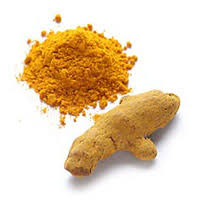
Turmeric rhizome

It is only in recent years that Western scientists have increasingly recognised the medicinal properties of turmeric. According to a 2005 article in the Wall Street Journal titled, "Common Indian Spice Stirs Hope," research activity into curcumin, the active ingredient in turmeric, is exploding. In that year supplement sales increased 35% from 2004, and the U.S. National Institutes of Health had four clinical trials underway to study curcumin treatment for pancreatic cancer, multiple myeloma, Alzheimer's, and colorectal cancer.

A 2004 UCLA-Veterans Affairs study involving genetically altered mice suggests that curcumin, the active ingredient in turmeric, might inhibit the accumulation of destructive beta amyloids in the brains of Alzheimer's disease patients and also break up existing plaques. "Curcumin has been used for thousands of years as a safe anti-inflammatory in a variety of ailments as part of Indian traditional medicine," Gregory Cole, Professor of medicine and neurology at the David Geffen School of Medicine at UCLA said.

Curcumin has been identified as a powerful MAO-A inhibitor, at doses above 150 mg/kg. MAO-B inhibition was not present until doses escalate above 550mg/kg.

Another 2004 study conducted at Yale University involved oral administration of curcumin to mice homozygous for the most common allele implicated in cystic fibrosis. Treatment with curcumin restored physiologically-relevant levels of protein function.

Anti-tumoral effects against melanoma cells have been demonstrated.

A recent study involving mice has shown that turmeric slows the spread of breast cancer into lungs and other body parts. Turmeric also enhances the effect of taxol in reducing metastasis of breast cancer.

Curcumin is also thought to be an antinociceptive agent (pain reliever). In the November 2006 issue of Arthritis & Rheumatism, a study was published that showed the effectiveness of turmeric in the reduction of joint inflammation, and recommended clinical trials as a possible treatment for the alleviation of arthritis symptoms. It is thought to work as a natural inhibitor of the cox-2 enzyme, and has been shown effective in animal models for neuropathic pain secondary to diabetes, among others.

Presenting their findings at the Endocrine Society’s annual meeting in San Francisco in June 2008, researchers discovered that turmeric-treated mice were less susceptible to developing type 2 diabetes, based on their blood glucose levels, and glucose and insulin tolerance tests. They also discovered that turmeric-fed obese mice showed significantly reduced inflammation in fat tissue and liver compared to controls. They speculate that curcumin in the turmeric lessens insulin resistance and prevents type 2 diabetes in these mouse models by dampening the inflammatory response provoked by obesity.
Readmore »»

Beberapa Manfaat dan Khasiat Kunyit


Ada beragam cara penggunaan kunyit bagi kesehatan, kunyit pun memiliki segudang manfaat. Selain untuk bumbu dapur, kunyit juga mampu digunakan untuk obat tradisional baik menjaga kesehatan maupun kecantikan. Salah satunya adalah :

Diabetes Mellitus

Bahan : 3 rampang kunyit, 1/2 sendok teh garam
Cara membuat : kedua bahan tersebut direbus dengan 1 liter air hingga mendidih, kemudian disaring. Cara menggunakan : diminum 2 kali seminggu 1/2 gelas.

Tifus

Bahan : 2 rimpang kunyit, 1 bonggol sere, 1 lembar daun sambiloto. Cara membuat : semua bahan tersebut ditumbuk halus dan dipipis, kemudian ditambah 1 gelas ai masak yang masih hangat dan disaring.
Cara menggunakan : diminum, dan dilakukan selama 1 minggu berturut - turut

Usus Buntu

Bahan : 1 rimpang kunyit, 1 butir buah jeruk nipis, 1 potong gula kelapa / aren, garam secukupnya
Cara membuat : kunyit diparut dan jeruk nipis diperas, kemudian dicampur dengan bahan yang lain dan disedu dengan 1 gelas air panas kemudian disaring
Cara menggunakan : diminum setiap pagi setelah makan secara teratur

Disentri

Bahan : 1 - 2 rimpang kunyit, gambir dan kapur sirih secukupnya. Cara membuat : semua bahan tersebut direbus dengan 2 gelas air sampai mendidih hingg tinggal
1 gelas kemudian disaring
Cara menggunakan : diminum dan diulangi sampai sembuh

Sakit Keputihan

Bahan : 2 rimpang kunyit, 1 genggam daun beluntas, 1 gagang buah asam, 1 potong gula kelapa / are Cara membuat : semua bahan tersebut direbus dengan 1 liter air hingga mendidih kemudian disaring
Cara menggunakan : diminum 1 gelas sehari

Haid Tidak Lancar

Bahan : 2 rimpang kunyit, 1/2 sendok teh ketumbar, 1/2 sendok teh biji pala, 1/2 genggam daun
srigading
Cara membuat : semua bahan tersebut ditumbuk halus kemudian direbus dengan 1 liter air hingga mendidih kemudian disaring
Cara menggunakan : diminum 1 gelas sehari

Readmore »»

Khasiat Kunyit

si kunyit dapat menyembuhkan penyakit sengugut. Makan kunyit mentah sebagai ulam ketika makan nasi. Anda akan rasai kemujarabannya. Melancarkan Perjalanan Darah

1. Kunyit juga mencegah kulit daripada cepat berkedut. Parut sedikit kunyit dan perah airnya. Amalkan meminumnya.
2. Parut dua ketul isi kunyit dan seketul lempoyang. Kemudian bubuhkan setengah cawan air hingga sebati. Tapis dan campurkan dengan satu sudu besar air limau nipis dan madu. Minum selama tiga hari berturut-turut. Selain menyihatkan bahagian dalam tubuh, ia juga mencantikkan kulit.

Memanaskan Badan

Tumbuk beberapa ketul kunyit hingga hancur. Campurkan dengan sedikit air dan tapiskan. Minum airnya tiga kali seminggu.

Daun Kunyit
Sekiranya anda diserang pening atau sakit kepala, ramas beberapa helai daun kunyit bersama sedikit air. Selepas itu sapulah di kepala hingga rata.

Readmore »»

Friday, 26 December 2008

GARLIC, The Powerful Home Remedies 1


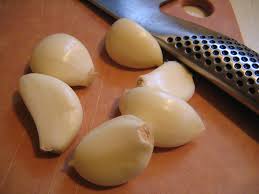
Garlic is the most common and basic herb that most people in this world often use as part of cooking ingredients for their meals. I believe, garlic is always available in every kitchen around the globe. Well, you do have garlic in your kitchen, right? Furthermore, its power as natural home remedies is unquestionable!

Texture & Contour

Garlic is officially well known as Allium sativum L. For centuries, garlic has been used throughout recorded history for both culinary and medicinal purposes. It has a characteristic pungent, spicy flavor that mellows and sweetens considerably with cooking. A bulb of garlic, the most commonly used part of the plant, is divided into numerous fleshy sections called cloves. The cloves are used as seed, for consumption (raw or cooked), and for medicinal purposes. The leaves, stems (scape) and flowers (bulbils) on the head (spathe) are also edible and most often consumed while immature and still tender. The papery, protective layers of ’skin’ over various parts of the plant and the roots attached to the bulb are the only parts not considered palatable.

Storage

Domestically, garlic is stored warm (above 18 °C or 64 °F) and dry, to keep it dormant (so that it does not sprout). It is traditionally hung; softneck varieties are often braided in strands called “plaits” or grappes. Untreated garlic kept in oil at room temperature can support the growth of deadly Clostridium botulinum. Peeled cloves may be stored in wine or vinegar in the refrigerator. Commercially, garlic is stored at 0 °C, also dry.

Farming

Allium sativum grows in the wild in areas where it has become naturalized. Garlic is easy to grow and can be grown year-round in mild climates. In cold climates, cloves can be planted in the ground about six weeks before the soil freezes, and harvested in late spring. Garlic plants are not attacked by pests. Garlic plants can be grown close together, leaving enough room for the bulbs to mature, and are easily grown in containers of sufficient depth. Even though you don’t have a garden or backyard and living in an apartment, there is always a way to cultivate garlic, for example, in a pot. Thus, in case you live quite far from the market and suddenly you are running out on garlic, no need to worry being out of stock.

Stay tune for the second part about this powerful garlic. How does garlic play significant role to our health, the side effects and important recommendations to be concerned.

Source: http://www.ourhomeremedies.com/

Readmore »»

Garlic for Acne and Pimple Treatment


Garlic as home remedies is also useful to deal with your skin problems. If you feel there will be pimple or acne start to show up on your skin, which usually begin with a spot or a bit swollen that feels itchy and if you scratch it you feel pain or the particular skin surface is harder than usual, better to act fast.

Hence before that pimple or acne is getting bigger, try to treat them with:

Rub pimple or acne candidate with garlic slice several times. It is claimed that they will not grow or bigger.

Please bear in mind, before you carry out these simple steps, make sure you have already cleaned your hands and the particular skin, including the garlic you will use as remedies.

Source: http://www.ourhomeremedies.com/

Readmore »»

  © Blogger template Newspaper III by Ourblogtemplates.com 2008

Back to TOP